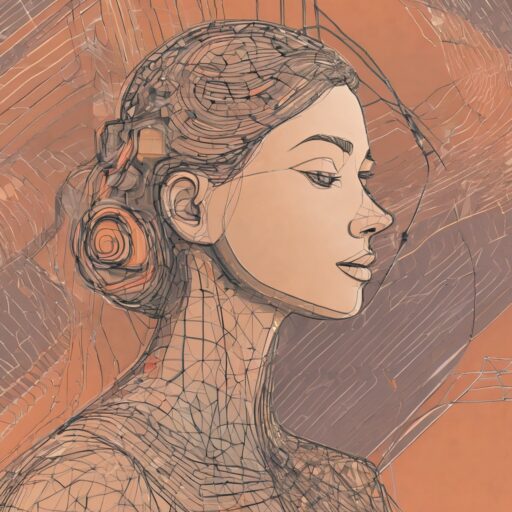
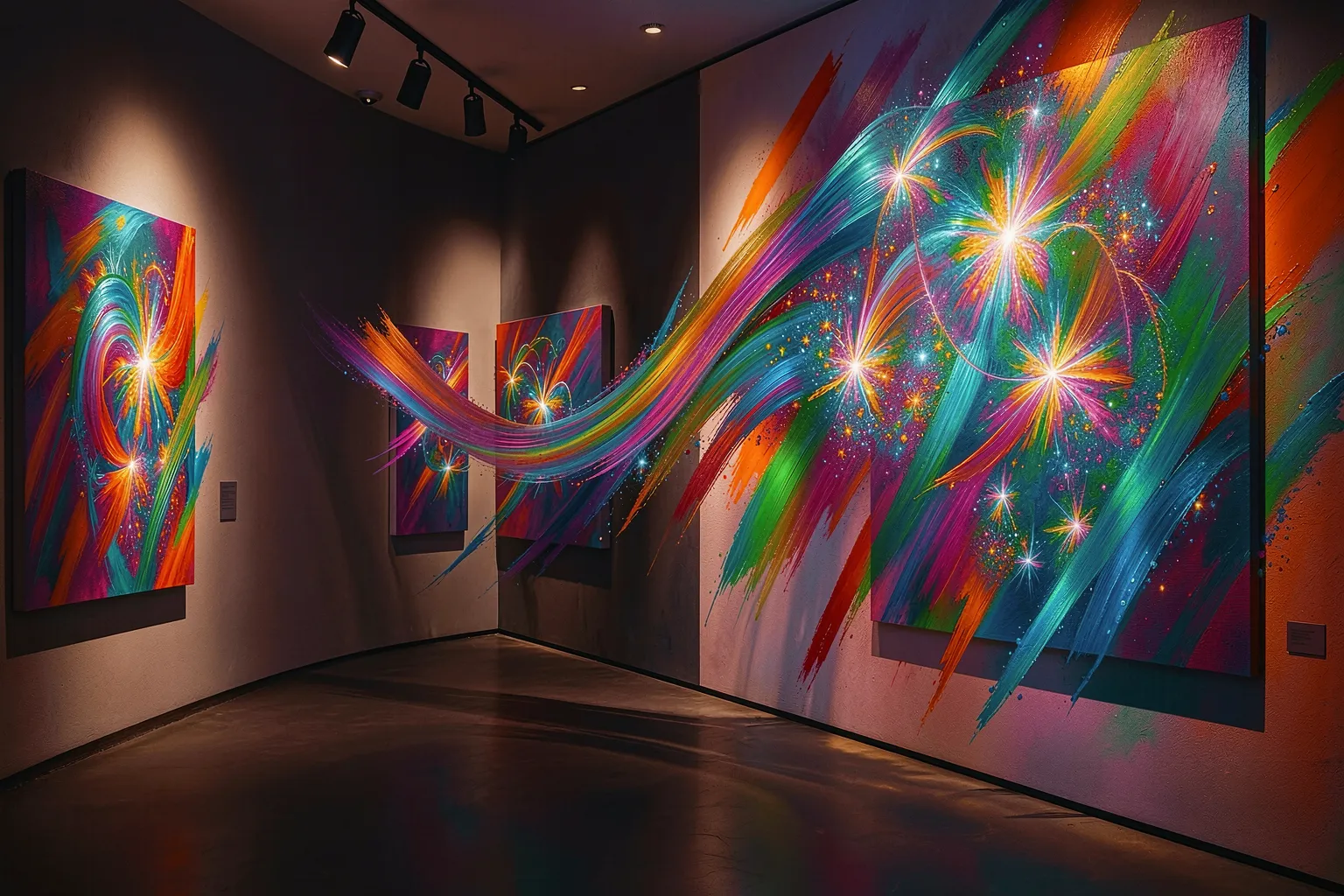
Something quietly radical is happening in galleries and studios around the world: the tools once dismissed as gimmicks are becoming part of the artist’s core vocabulary. Generative AI has moved from the tech press to the exhibition wall — and with it, a genuinely new visual language for contemporary art is taking shape.
From novelty to medium
Only a few years ago, AI-generated images were treated as curiosities: impressive, uncanny, but not quite art. That framing no longer holds. Artists increasingly use generative models the way earlier generations used the camera, the screen print, or the synthesizer — as a medium with its own grammar, quirks, and expressive range.
The shift matters because it changes the question. We have stopped asking “can a machine make art?” and started asking the far more interesting one: what can an artist say with these tools that could not be said before?
A new wave of contemporary style
Look closely at the work emerging from this movement and a distinct aesthetic vocabulary appears — one that blends the painterly with the computational:
- Hybrid surfaces — oil-like brushwork dissolving into fractal detail and iridescent digital texture, refusing to sit fully in either the analog or the virtual.
- Data-driven abstraction — compositions that visualize patterns, distributions, and latent space itself, turning the inner logic of the model into subject matter.
- Remix and reinterpretation — the fluent combination of historical movements, from Baroque drama to Art Deco geometry, recombined into something that belongs to neither and both.
- Controlled serendipity — artists steering the model’s surprises rather than eliminating them, treating unpredictability as collaborator rather than error.
The debate the art world is actually having
The contemporary art scene is not naive about all this. The louder conversations right now are less about spectacle and more about substance: questions of authorship (who is the artist when a model is trained on millions of images?), training data and consent, and how museums and collectors should value work that can, in principle, be regenerated at will.
These are real tensions, and they are productive ones. Every major new medium — photography included — arrived with the same anxieties about authenticity and craft. The art world tends to resolve them not by rejecting the tool, but by absorbing it and deciding, work by work, what counts as good.
Why this is good news for creativity
The most compelling argument for AI in art is not efficiency — it is access and range. A designer can now explore a hundred stylistic directions in an afternoon. A painter can prototype a mural at architectural scale before touching a wall. A curator can imagine an exhibition that never existed. The barrier between an idea and its first visual form has never been lower.
That does not replace taste, intention, or skill. If anything, it raises their value. When anyone can generate an image, the artist’s real contribution becomes clearer than ever: knowing what is worth making and why.
Where we come in
At AI Art Designer, this is exactly the territory we explore — open, generative systems for art, design, and architecture, free from artificial limits. Every image in our galleries is generated with these tools and free for you to use, as long as you credit us. Our belief is simple: creativity grows when data, models, and imagination are open.
Curious what these tools can do with your own ideas? Explore the AI Art Designer and start creating.