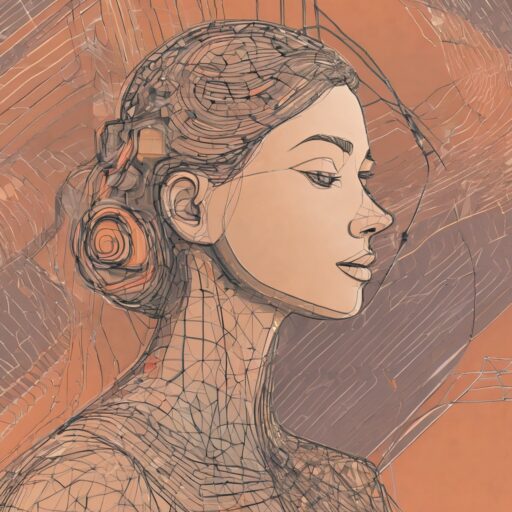
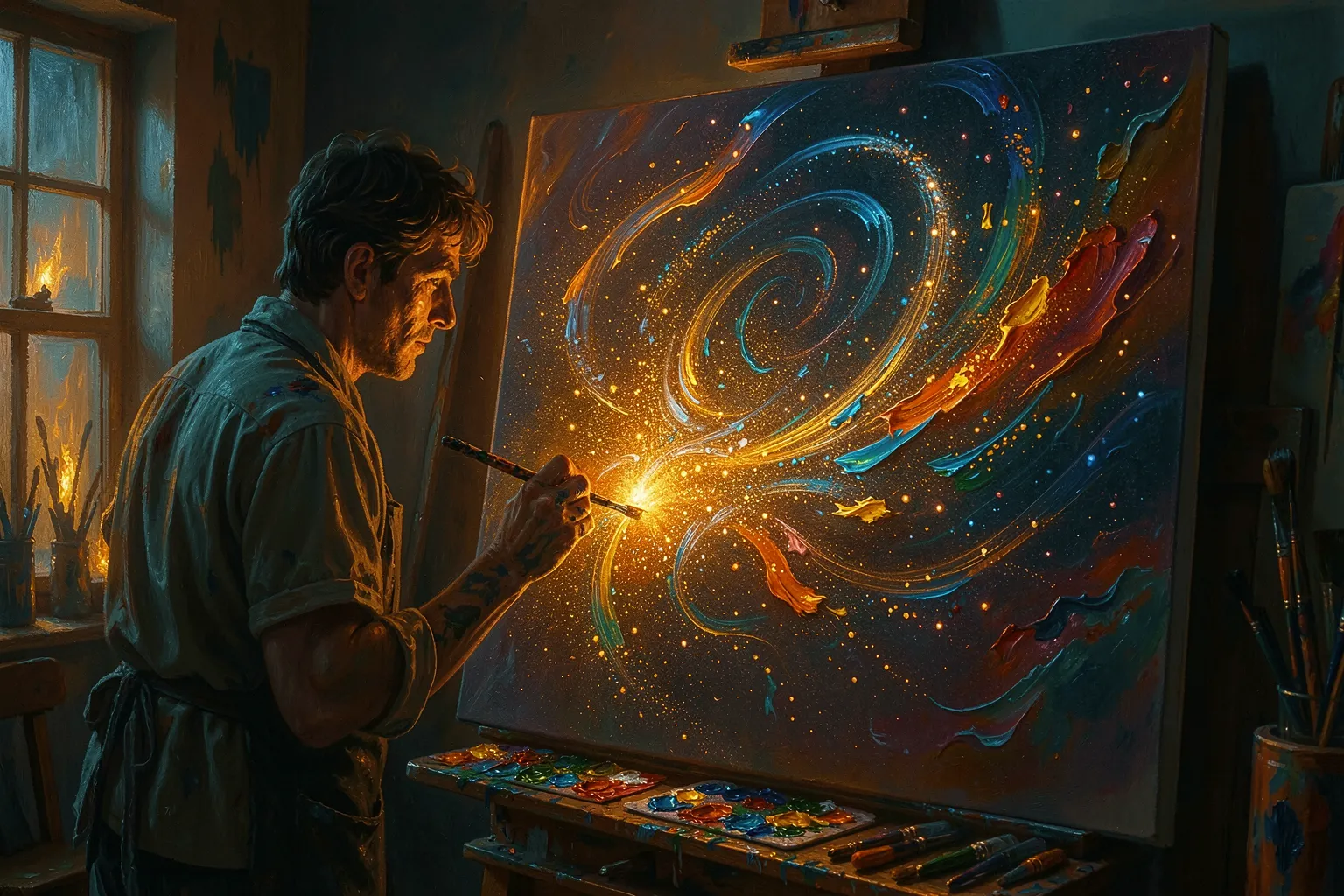
For years, the debate around generative AI treated it as a vending machine: type a wish, receive a picture. But the artists doing the most interesting work today have quietly moved past that idea. To them, a diffusion model is not an oracle that answers prompts — it is a material, something to be pushed, layered, and coaxed the way a painter works oil or a printmaker works a plate. The prompt is only the first brushstroke.
Understanding AI as a medium rather than a shortcut changes everything about what comes out the other side. It rewards patience, taste, and iteration over clever wording. And it explains why two people using the same tool can produce work that looks nothing alike.
The Prompt Is a Sketch, Not the Painting
A seasoned digital artist rarely stops at their first generation. The initial image is a rough compositional study — a way to find the pose, the light, the mood. From there the real work begins: regenerating a hand that came out wrong, extending the canvas outward, repainting a background while keeping a figure intact. The model becomes a collaborator that never tires of variations, but the decisions about which variation matters remain entirely human.
This is why „prompt engineering“ is a misleading name for the craft. The skill is not in the sentence; it is in the editing eye that knows when something is almost right and how to nudge it the last ten percent.
Steering the Machine: Control as Creativity
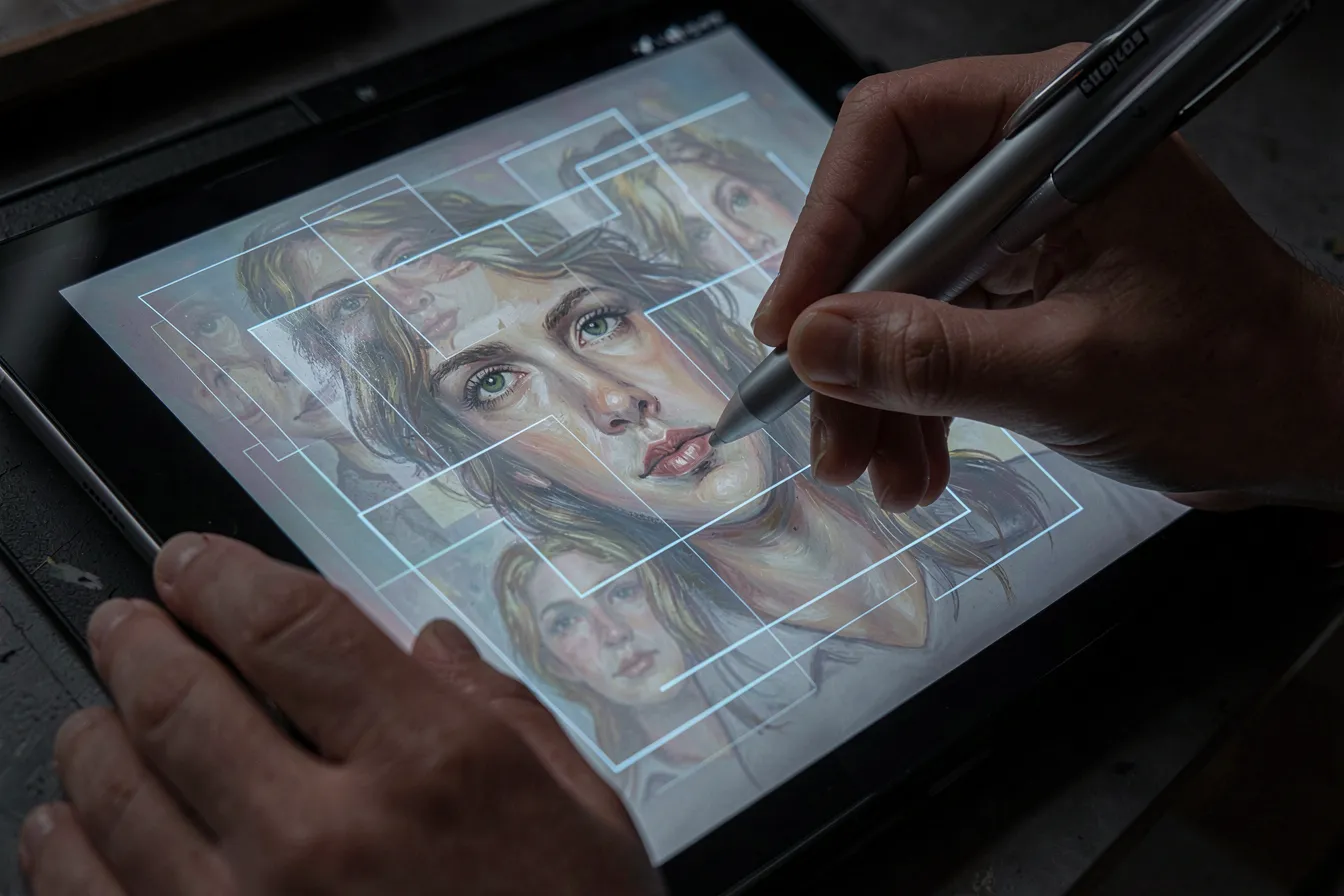
The tools that separate casual users from serious practitioners are the ones that hand back control. Techniques and features that have become part of the working vocabulary include:
- Inpainting and outpainting — surgically repainting a region or expanding a scene beyond its original frame.
- Image-to-image — feeding a sketch, photo, or earlier render back in to guide structure while transforming style.
- Reference and pose guidance — locking composition, edges, or a figure’s stance so the model fills in surface rather than reinventing the whole picture.
- Seed and step control — treating randomness as an adjustable dial rather than pure chance.
Each of these turns a one-shot generator into an instrument with knobs. Mastery looks a lot like learning any other craft: hundreds of small experiments until the tool feels like an extension of intent.
Style-Mixing and the New Palette
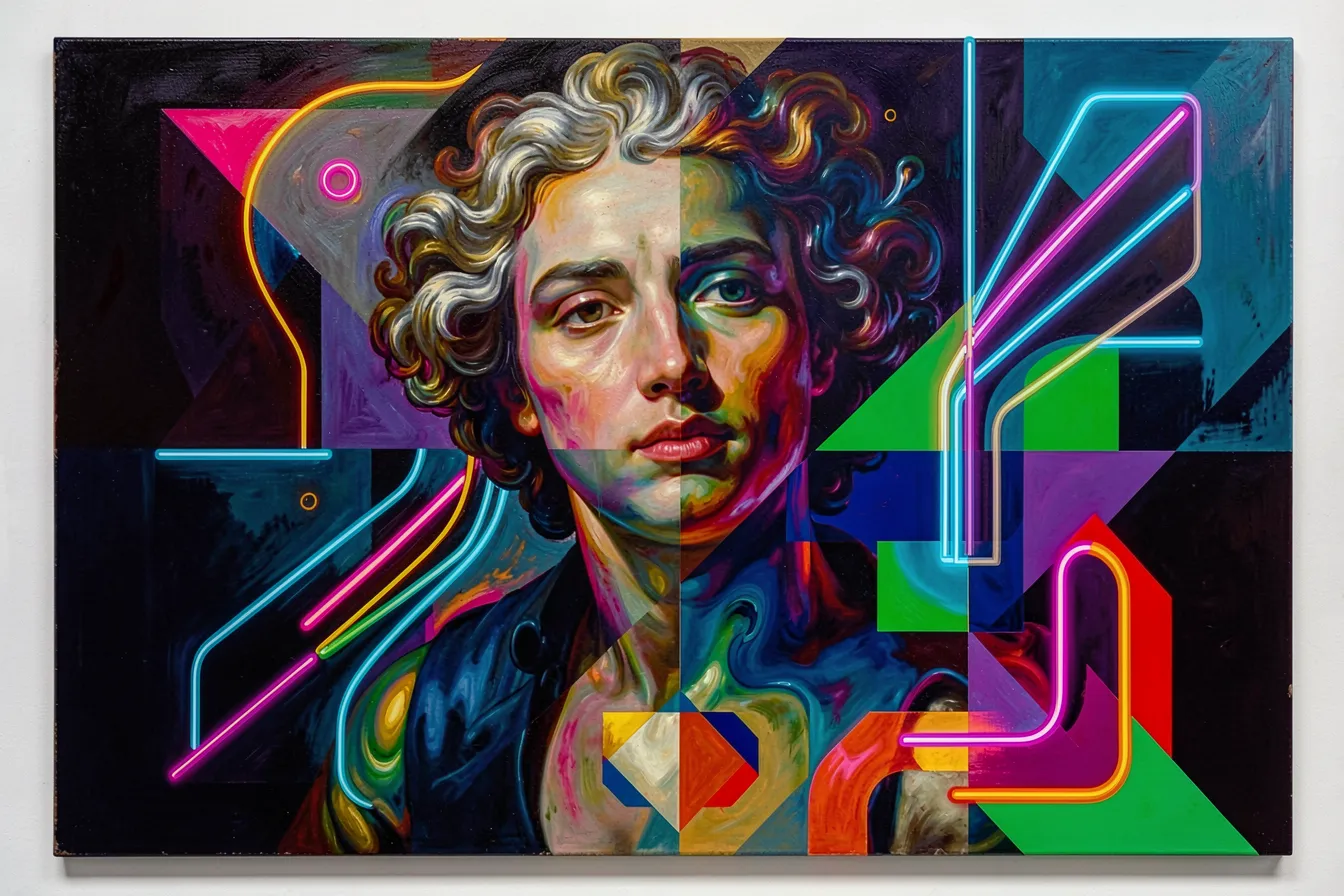
One of the most genuinely novel capabilities is fluid style-blending. An artist can pull the brooding chiaroscuro of Baroque painting into a futuristic cityscape, or fold the flat geometry of mid-century poster design into a portrait. In traditional media this kind of fusion took years of study to pull off convincingly. With generative models it becomes a compositional choice — a palette of entire art-historical languages, mixable in seconds.
The danger, of course, is that easy fusion produces easy pastiche. The work that endures still comes from someone with a point of view — a reason for the collision of styles, not just the novelty of it.
Iteration as the Real Discipline
Ask working AI artists what they spend their time on and the answer is rarely „writing prompts.“ It is curation and repetition: generating dozens of candidates, killing most of them, refining the survivors, compositing across several outputs, and finishing by hand in an editor. The generative step is fast; the taste it takes to shape the results is not.
That reframing matters for anyone worried that AI flattens creativity. A medium doesn’t make art — it makes art possible. Photography didn’t end painting; it opened new questions about what an image is for. Generative models are doing the same, handing artists a strange, fast, endlessly generative material and leaving the hardest part — knowing what is worth making — exactly where it has always been.
Where This Leaves the Artist
The most exciting frontier is not better prompts but deeper integration: AI woven into a real workflow alongside drawing tablets, photo references, and manual editing, used for what it is uniquely good at and set aside where a human hand does better. Treated that way, it stops being a gimmick and becomes what every durable art tool eventually becomes — invisible, in service of the vision behind it.
If you want to experiment with generative art as a genuine medium rather than a novelty, explore the tools and galleries at ai-art-designer.de and start building your own visual language.