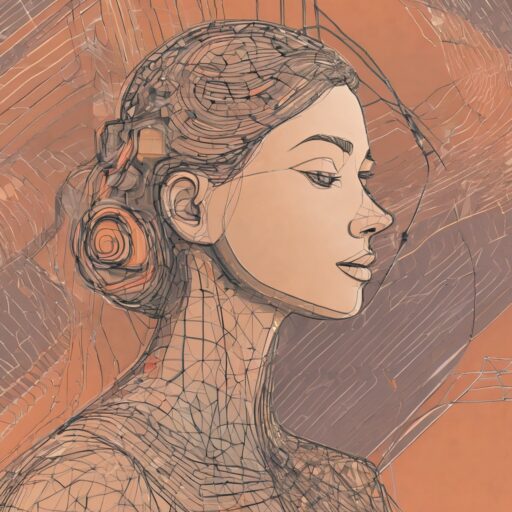
For most of the last decade, artificial intelligence entered the art world through the side door — a curiosity in a project space, a talking point on a panel, a viral image that critics were not quite sure how to categorize. In 2026 that posture has changed. AI art now has its own dedicated institutions, its own market segment, and its own increasingly heated debates about who, exactly, gets to be called the author. The story of the contemporary art scene this year is not whether AI belongs in the room, but how thoroughly it has rearranged the furniture.
A Museum Built for Machine-Made Art
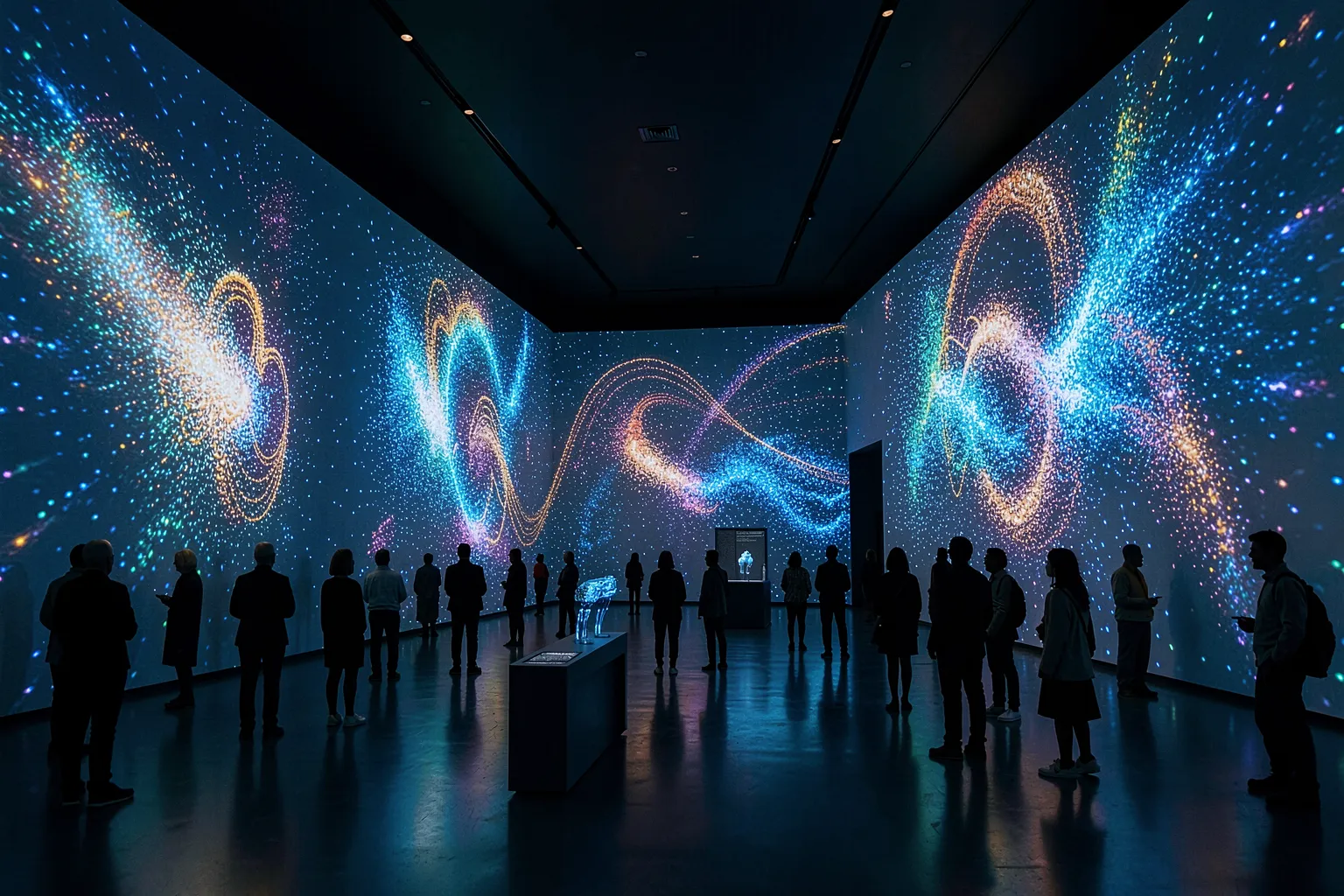
The clearest signal is architectural. This year saw the arrival of institutions conceived specifically around generative and data-driven work — most notably DATALAND, positioned as the first museum devoted entirely to AI arts. A dedicated building changes the conversation in a way that a temporary exhibition never could. It implies permanence, a collection, a canon-in-formation, and a curatorial argument that machine-assisted work deserves the same scholarly seriousness as painting or sculpture.
For visitors, the experience is deliberately different from a traditional gallery. Instead of static objects on white walls, these spaces lean into immersive, ever-shifting installations — floor-to-ceiling projections, real-time data feeds, and work that is never identical from one minute to the next. The medium’s defining trait, its fluidity, becomes the exhibition design itself.
The Authorship Question Refuses to Settle
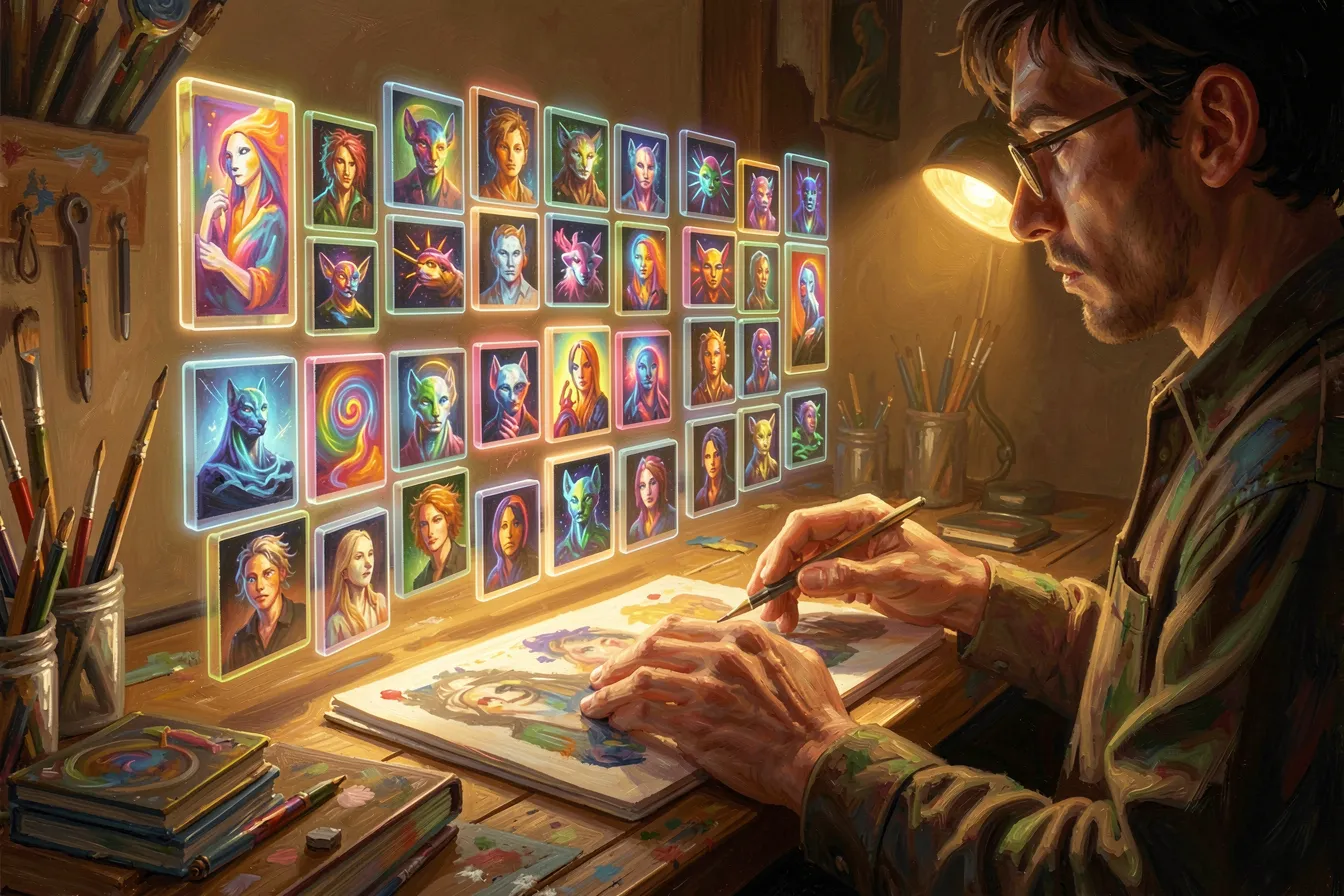
Every technological shift in art eventually collides with a legal and philosophical wall, and AI’s is authorship. Courts have continued to hold, at least in the United States, that work generated entirely by a machine without meaningful human input cannot be copyrighted. That single principle is quietly reshaping how artists describe their process. The emphasis has moved away from the „magic button“ and toward the human decisions around it: the datasets chosen, the models trained, the thousands of iterations discarded, the final act of curation and editing.
This is why the artists gaining institutional traction — figures who treat the model as an instrument rather than a vending machine — are winning the argument. Their claim to authorship rests not on pressing „generate“ but on a sustained, recognizable point of view expressed through a new toolset. In practice, the contemporary art world is rediscovering an old truth: the tool has never been the artist.
What Galleries Actually Think
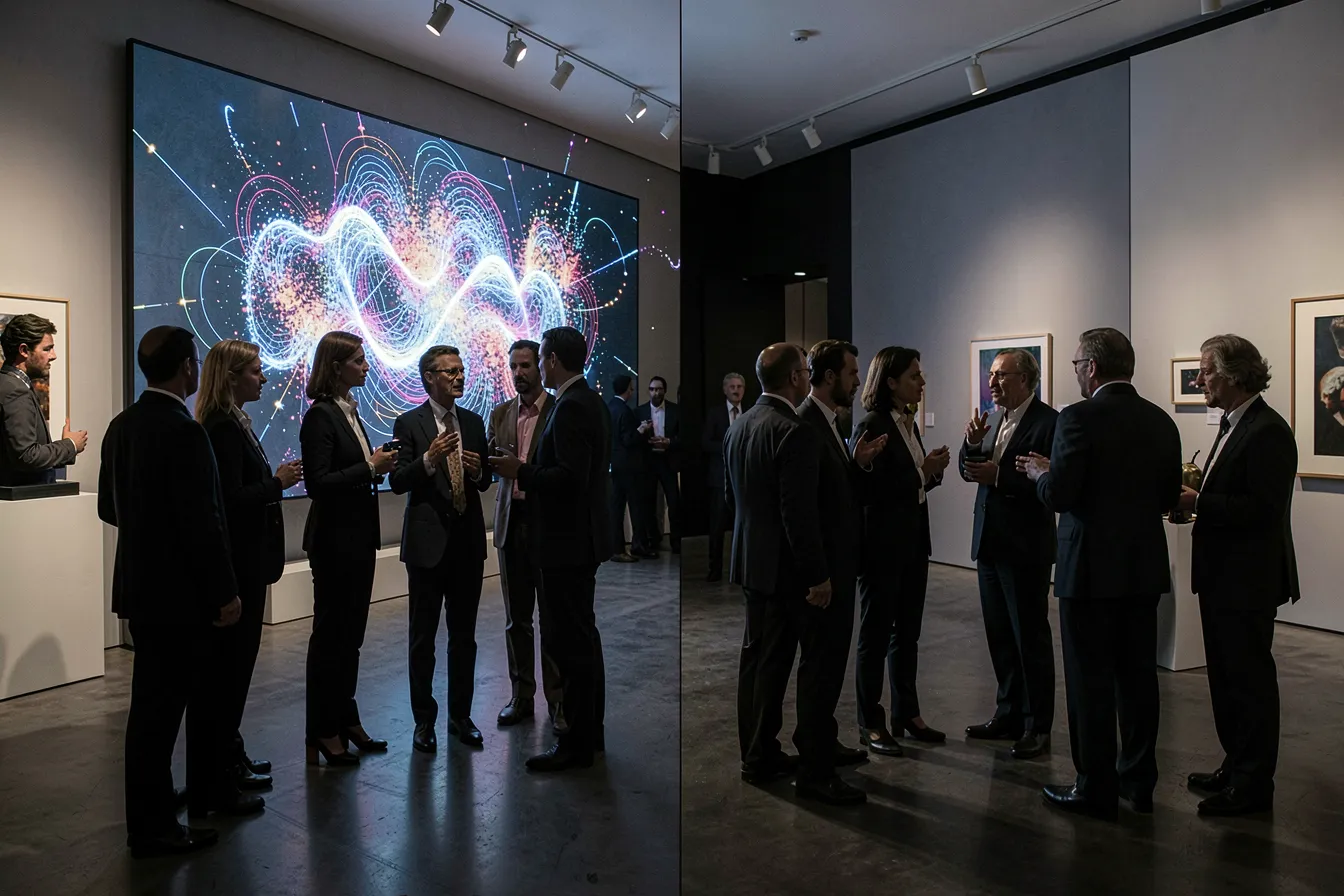
Surveys of the commercial gallery sector in 2026 reveal an ecosystem split down the middle. On one side, dealers see AI as an expansion of the medium — a way to reach new collectors and to sell work that could not have existed five years ago. On the other, there is genuine anxiety about labor, about training data scraped without consent, and about a flood of low-effort output diluting the market’s credibility.
- Opportunity: new formats, younger collectors, and a fast-growing digital-native audience.
- Concern: provenance, consent in training data, and distinguishing serious practice from novelty.
- Consensus: transparency about process is becoming a baseline expectation, not a bonus.
Museums Rethink Their Own Clock
Perhaps the subtlest change is temporal. Traditional museums are built around permanence — an object enters a collection and, ideally, outlives everyone who made it. Generative work resists that logic. A piece may exist as a system rather than a fixed artifact, capable of producing endless variations. This is forcing institutions to ask uncomfortable questions: What does it mean to „collect“ a process? How do you conserve a model that depends on hardware and software that will be obsolete in a decade? The answers are still being drafted, and that uncertainty is itself one of the most interesting stories in contemporary art right now.
Where This Leaves Us
The through-line of 2026 is legitimacy. AI art is no longer fighting for a seat at the table; it is negotiating the terms of its permanent residence. Dedicated museums, evolving copyright law, divided galleries, and a market learning to price the unpriceable all point to the same conclusion — this is a medium in its institution-building phase, the messy but decisive moment when a movement becomes a fixture.
If you want to explore how these ideas translate into actual imagery — art styles, design directions, and AI-assisted creativity you can use — take a look at what we’re building at ai-art-designer.de. The gallery is only getting more interesting from here.