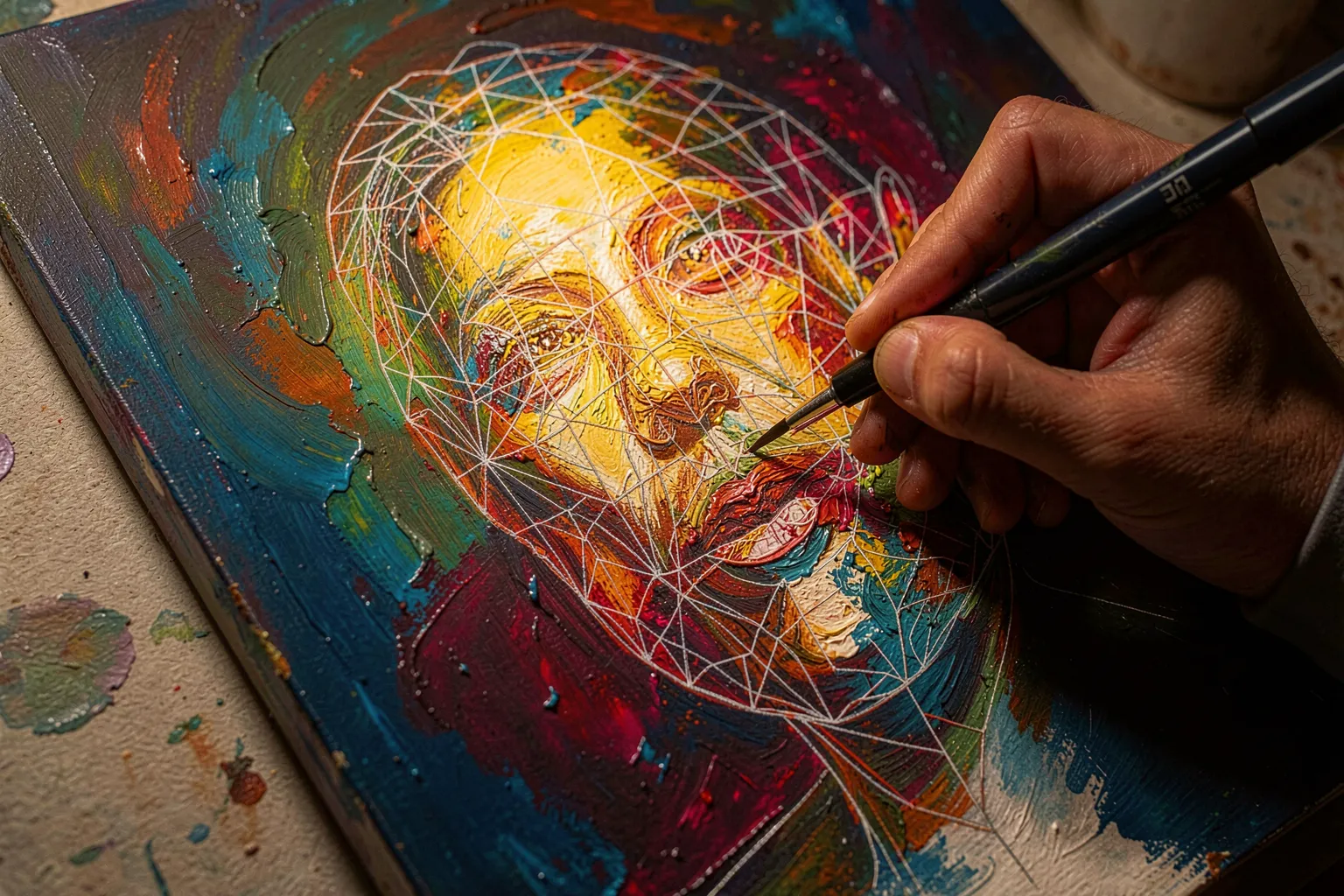
Prompts alone leave too much to chance. You type a vivid sentence, the model answers, and you accept whatever composition it hands you. Serious artists want more control. They want to place a figure, fix a horizon, and lock a pose before the model paints a single pixel. Conditioning tools give them that grip. With ControlNet and its cousins, the artist stops guessing and starts directing.
From Lucky Prompts to Deliberate Composition
Early AI art rewarded persistence over intention. Artists rolled the dice, regenerated, and cherry-picked the best frame. That workflow produced striking images, yet it hid a weakness. The artist rarely decided where anything went. ControlNet flips the relationship. It reads a second input — an edge map, a depth field, a rough sketch — and forces the model to respect that structure.
Now the artist sketches a composition in thirty seconds. Two figures on the left, an arch on the right, light falling from above. The model fills that skeleton with texture, color, and style. The idea stays yours. The rendering becomes the machine’s job.
The Conditioning Toolkit
Each conditioning method answers a different creative question. Artists mix them freely, layering two or three on a single canvas.
- Scribble and edge maps lock the outline. You draw loose lines; the model treats them as walls it cannot cross.
- Depth maps control space. They tell the model what sits near and what recedes, so perspective holds instead of collapsing.
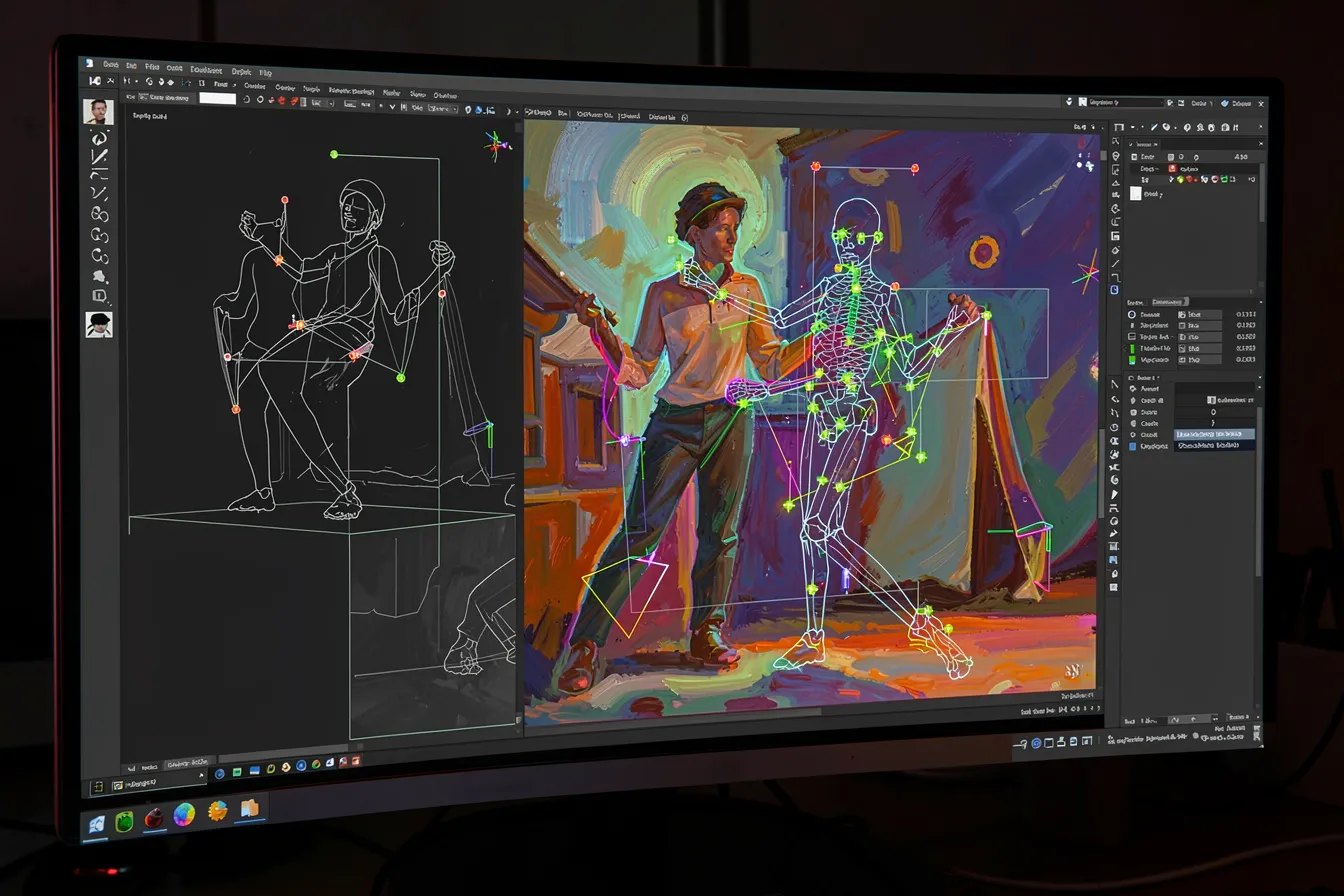
- Pose skeletons pin the body. You set the stance, the model dresses and lights it.
- Segmentation maps assign regions. This patch becomes sky, that block becomes stone, and the palette obeys.
The artist chooses how tightly to hold the reins. A low conditioning weight suggests; a high one commands. That single dial separates a happy accident from a planned frame.
Why Structure Frees the Style
People assume control kills spontaneity. The opposite happens. Once the composition holds steady, the artist experiments wildly with everything else. Swap the style from oil to ink. Shift the palette from dawn to midnight. Push the same pose through ten movements without losing the pose itself.
This separation matters. It splits the work into two clean layers — what the image shows and how it looks. Artists iterate on each layer alone. They refine the mood while the bones stay fixed, then lock the mood and stress-test the bones. The result feels authored, not stumbled upon.

Building a Coherent Body of Work
Galleries reward consistency. A series needs a recognizable hand across a dozen frames. Conditioning delivers exactly that. An artist reuses one depth template across a whole collection, so every piece shares a spatial logic. Characters keep their proportions from frame to frame. Recurring motifs land in the same corner every time.
This repeatability turns AI from a slot machine into a studio process. The artist plans a show, drafts each composition on paper, and renders the set with a shared structural DNA. Viewers feel the throughline even when the surfaces differ.
The Human Stays in Charge
Conditioning reframes the old authorship debate. Critics who dismiss AI art often picture a lazy prompt and a random output. ControlNet workflows tell a different story. The artist composes, tests, adjusts weights, and rejects dozens of tries before one earns a frame. Judgment drives every step. The machine renders; the person decides.
That balance points toward the medium’s future. Tools will expose finer controls — lighting rigs, camera paths, material sliders — and artists will grab each new lever. The craft grows as the controls grow. Direction, not luck, becomes the real skill.
Ready to direct your own frames instead of chasing them? Explore the techniques and galleries at ai-art-designer.de and start composing with intent.
Images: AI-Designed