
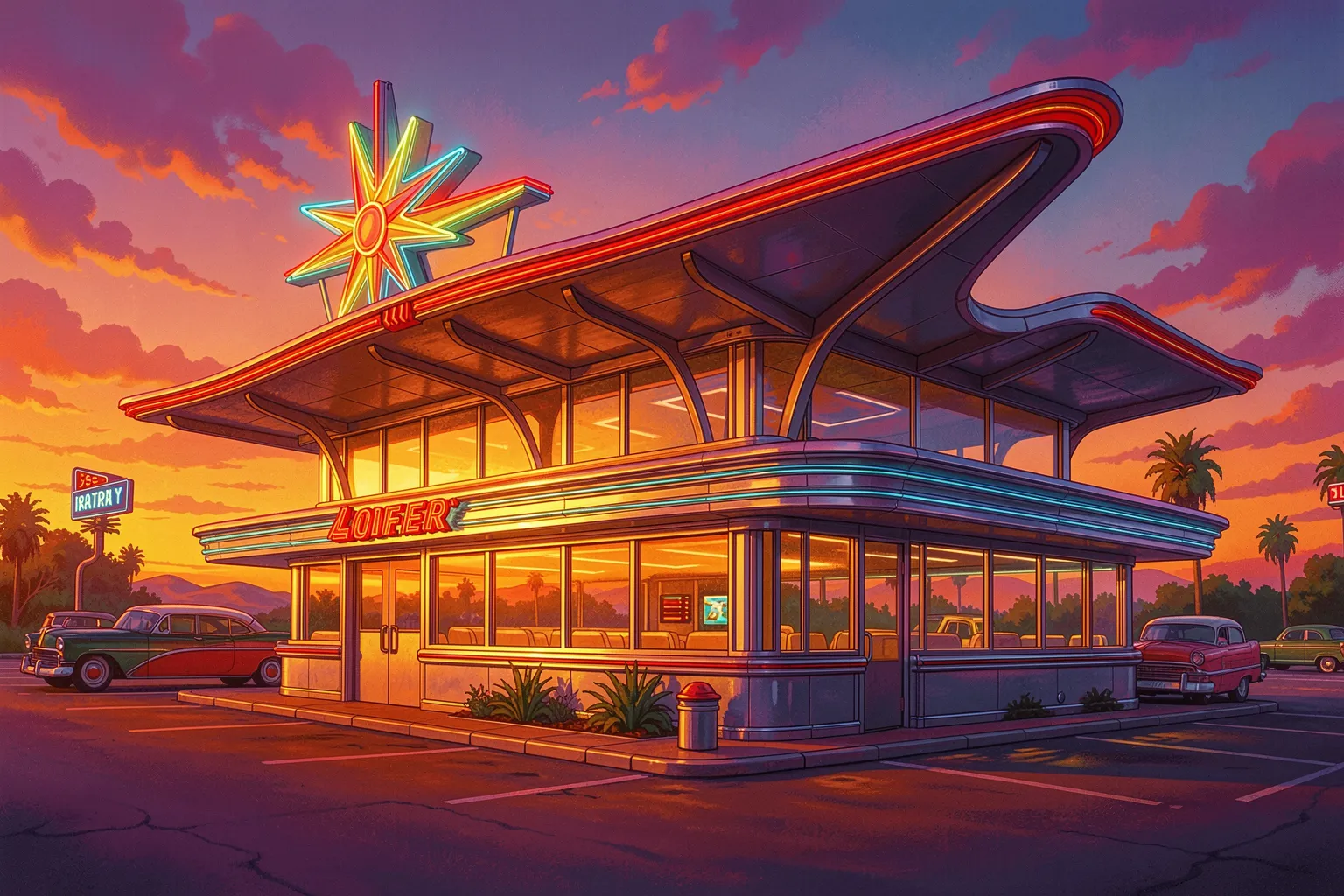
Boomerang roofs. Neon starbursts. Parabolas that seem to launch a coffee shop into orbit. Googie architecture captured mid-century America’s obsession with rockets, atoms, and the open road. Then the space race cooled, tastes shifted, and the wrecking ball took most of it. Now generative AI drags that jet-age optimism back into the light. Designers feed the machine a few keywords and watch cantilevered canopies bloom again.
This revival matters beyond nostalgia. Googie teaches AI something rare: how to make a building smile.
Why the atomic age vanished
Googie erupted in 1950s California. Architects like John Lautner shaped diners, motels, and bowling alleys into roadside sculpture. They tilted roofs at wild angles. They stacked glass, steel, and neon into shapes that screamed the future. Drivers spotted a Googie sign at 60 miles an hour and pulled over.
Critics loathed it. They called it vulgar, cheap, a cartoon of modernism. Preservationists rarely fought for a car wash. So bulldozers erased hundreds of these landmarks through the 1980s and 1990s. Today only fragments survive, and fans mourn what the freeways swallowed.
How AI reads the jet-age grammar
Generative models learn Googie the way they learn any style: through thousands of images. The style hands them a clear visual grammar. Upswept cantilevers. Amoeba and boomerang shapes. Exposed steel beams. Starbursts, atoms, and dingbats scattered like confetti. Signs that dwarf the buildings beneath them.
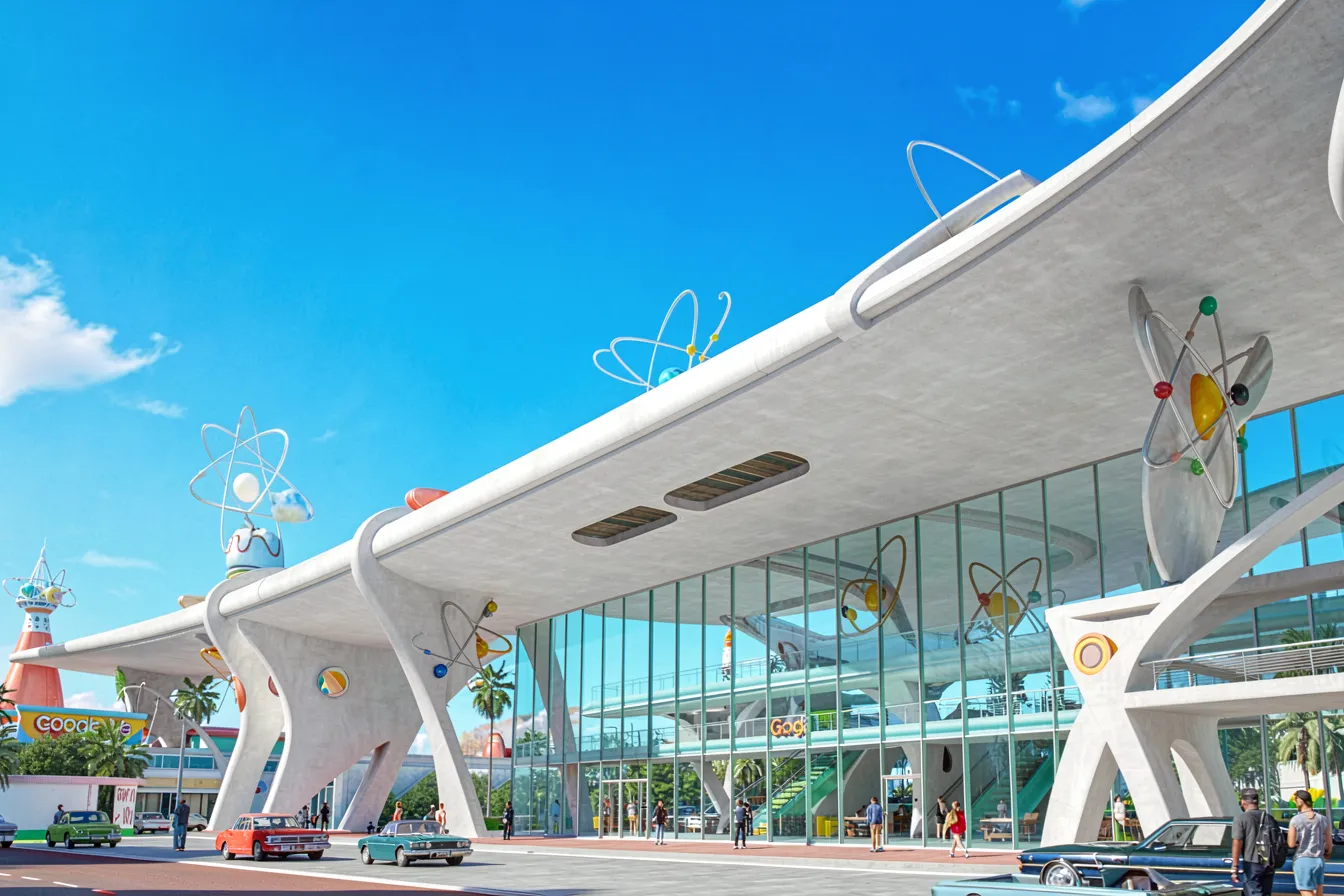
Feed a model those cues and it improvises fast. Ask for a Googie transit hub and it launches a swooping concrete wing over a glass concourse. Ask for a Googie library and it plants a neon rocket fin above the entrance. The AI does not merely copy old diners. It grafts the grammar onto buildings the 1950s never imagined.
What designers actually build with it
Studios now use AI to test Googie ideas before anyone lifts a pencil. A restaurant chain might explore a retro-futurist flagship in an afternoon. The team writes a prompt, generates twenty facades, and picks three to refine. That loop compresses weeks of sketching into hours.
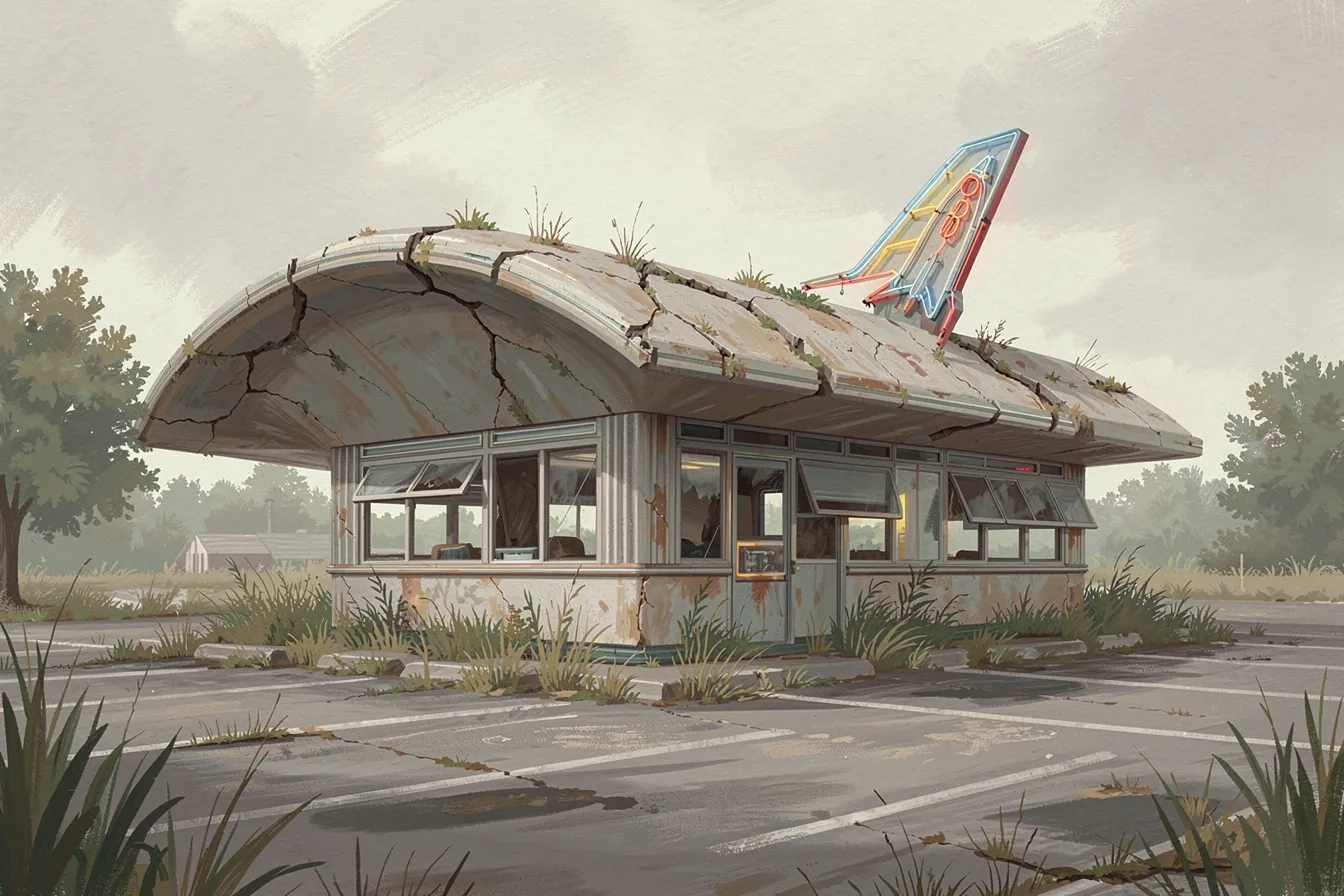
Set designers chase the look for film and games. A cyberpunk street needs a decaying diner? The model delivers a cracked parabolic roof under acid rain in seconds. Product designers borrow the curves too. They wrap the boomerang motif around lamps, chairs, and packaging.
- Concept sprints — dozens of facade variants in one sitting.
- Style transfer — recast a plain box as a jet-age landmark.
- World-building — populate films and games with believable retro-futures.
- Product spin-offs — push the motif onto furniture and graphics.
The danger of a style built on excess
Googie thrives on excess, and that trips the machine. Models often pile on too much. They stack five starbursts where one would sing. They bend every roof until the building loses its footing. The result reads as parody, not design.
Good operators fight back with restraint. They anchor each prompt in one bold gesture and let the rest stay calm. They study Lautner’s real work, where structure drives the drama. The best Googie never felt random. It celebrated engineering with a wink. AI captures the wink easily. It captures the engineering only when a designer insists.
A future that finally looks forward
Googie was always about tomorrow. It sold a world of space travel and endless highways, and it did so with joy. Most contemporary architecture forgot how to be joyful. Glass towers and gray boxes rarely make anyone grin.
AI now offers a cheap, fast way to reintroduce that optimism. Designers can prototype buildings that feel hopeful again, then adapt the best ideas for real sites. The atomic age may never fully return in concrete. In pixels, it already has.
Want to reimagine a design style with AI? Explore more experiments and tools at ai-art-designer.de.
Images: AI-Designed