For years the story of AI art was told from the outside. It lived on screens, in online drops, in heated comment threads — everywhere except the places culture reserves for the work it takes seriously. In 2026 that is finally changing. Generative art is getting something it has never had before: an institutional address. A dedicated museum has opened its doors, one of the world’s biggest fairs has carved out a section for the medium, and the debate is quietly shifting from „is this art?“ to „where does this art belong?“
DATALAND: the first museum built for AI art
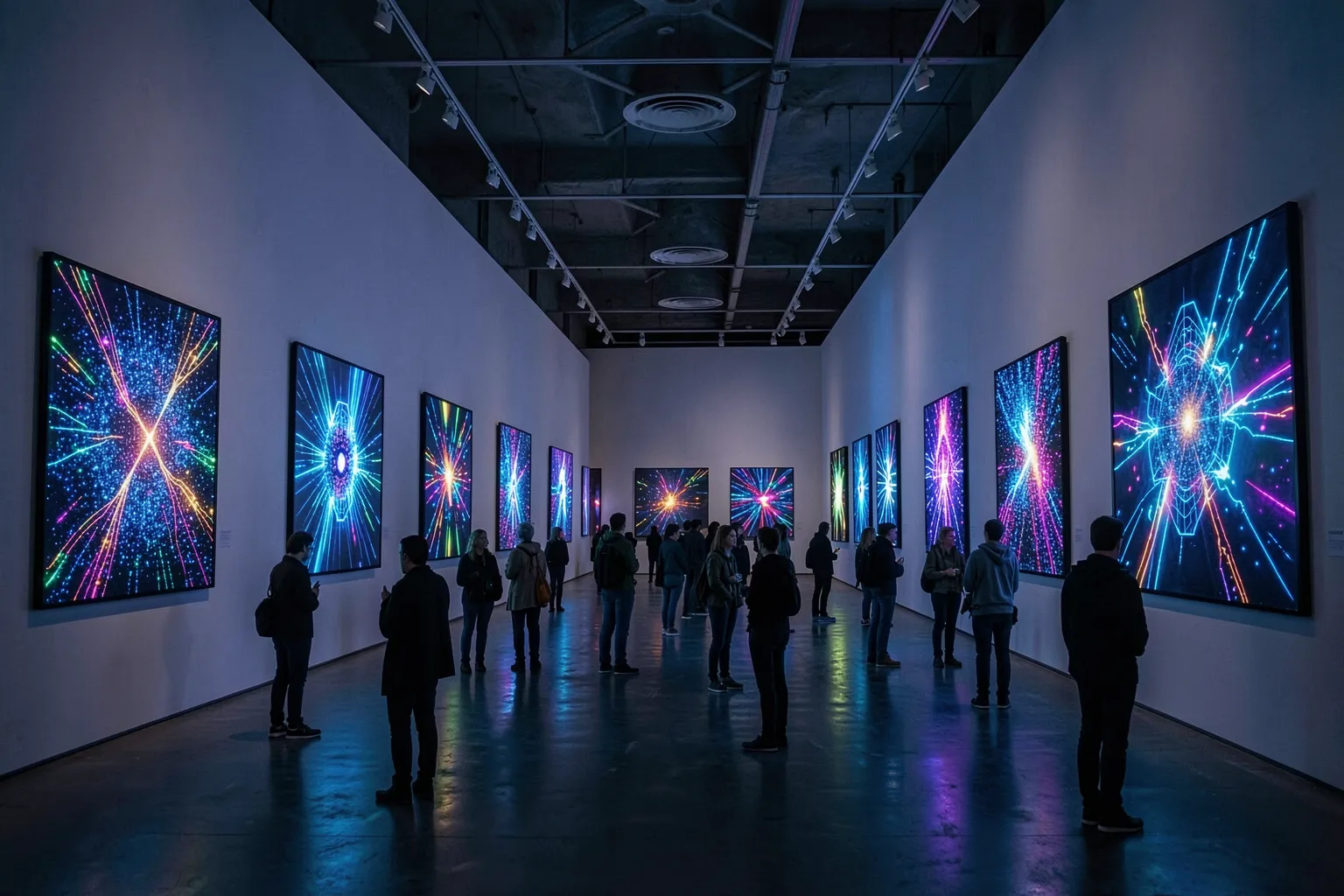
The headline development is DATALAND, positioned as the first museum devoted entirely to AI arts. That framing matters. A museum is not a gallery pop-up or a festival tent; it is a promise of permanence, a commitment to collect, conserve and contextualize. By dedicating an entire institution to work made with and about generative systems, DATALAND does something the wider art world has resisted — it treats AI not as a novelty attached to painting or photography, but as a lineage worth its own building.
The implications ripple outward. Museums shape canons. They decide what gets wall labels, what enters permanent collections, what future curators inherit. An institution built around AI art creates a place where the medium can be studied on its own terms: its early experiments, its breakthrough works, its dead ends. For a field that has often felt ephemeral — here today, retrained tomorrow — a museum is a way of saying this history is worth keeping.
Art Basel opens a door
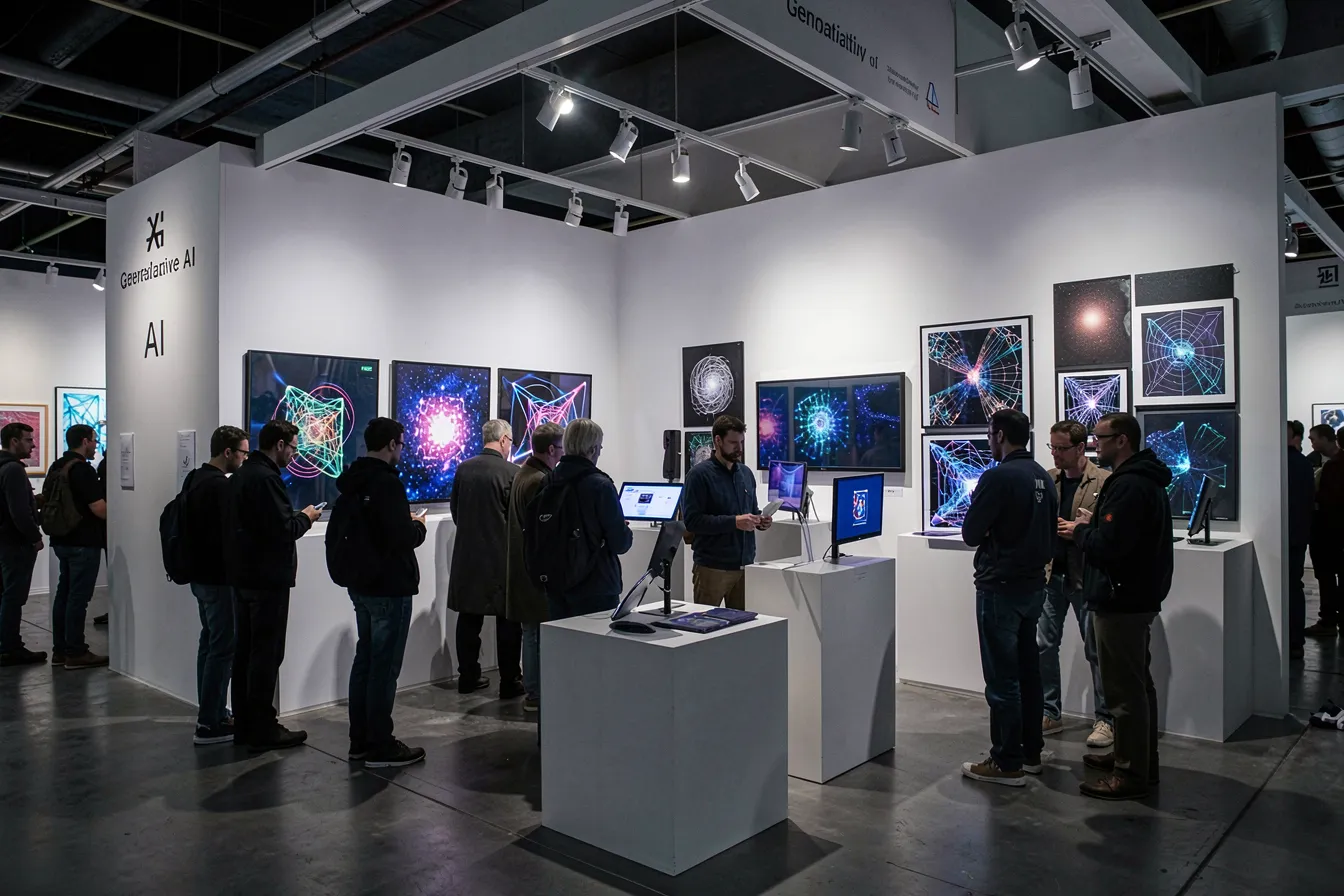
The second signal comes from the market’s most closely watched stage. The 2026 edition of Art Basel introduces, for the first time, a section dedicated to digital practices and generative AI. When a fair of that stature builds a room for a medium, it is telling collectors, dealers and institutions that the work is investable, showable and here to stay. Fair floors are where reputations are made and prices are set; a formal section is an invitation for serious money and serious attention to follow.
Taken together, a museum and a marquee fair section represent both halves of the art ecosystem — the scholarly and the commercial — moving in the same direction within a single year. That rarely happens by accident.
The skepticism hasn’t gone anywhere
None of this means consensus has arrived. The numbers still describe a divided profession. Only around 9% of gallery professionals consider AI-generated art a legitimate new medium, and roughly a quarter describe it as a destabilizing force for authorship and value. Those figures are a useful antidote to hype. Institutional recognition is running well ahead of professional enthusiasm.
The tension is real, and it is productive. The open questions haven’t been answered so much as relocated into more serious rooms:
- Authorship: when a model is trained on millions of images, who is the artist — the prompter, the engineer, the dataset, or all of them?
- Value: what makes one generated work worth collecting when the tools are widely available?
- Conservation: how do you preserve a piece whose „medium“ is a model that may not run in a decade?
A dedicated museum is, in part, an institution built to wrestle with exactly these problems — not to pretend they’re solved.
Recognition, not resolution
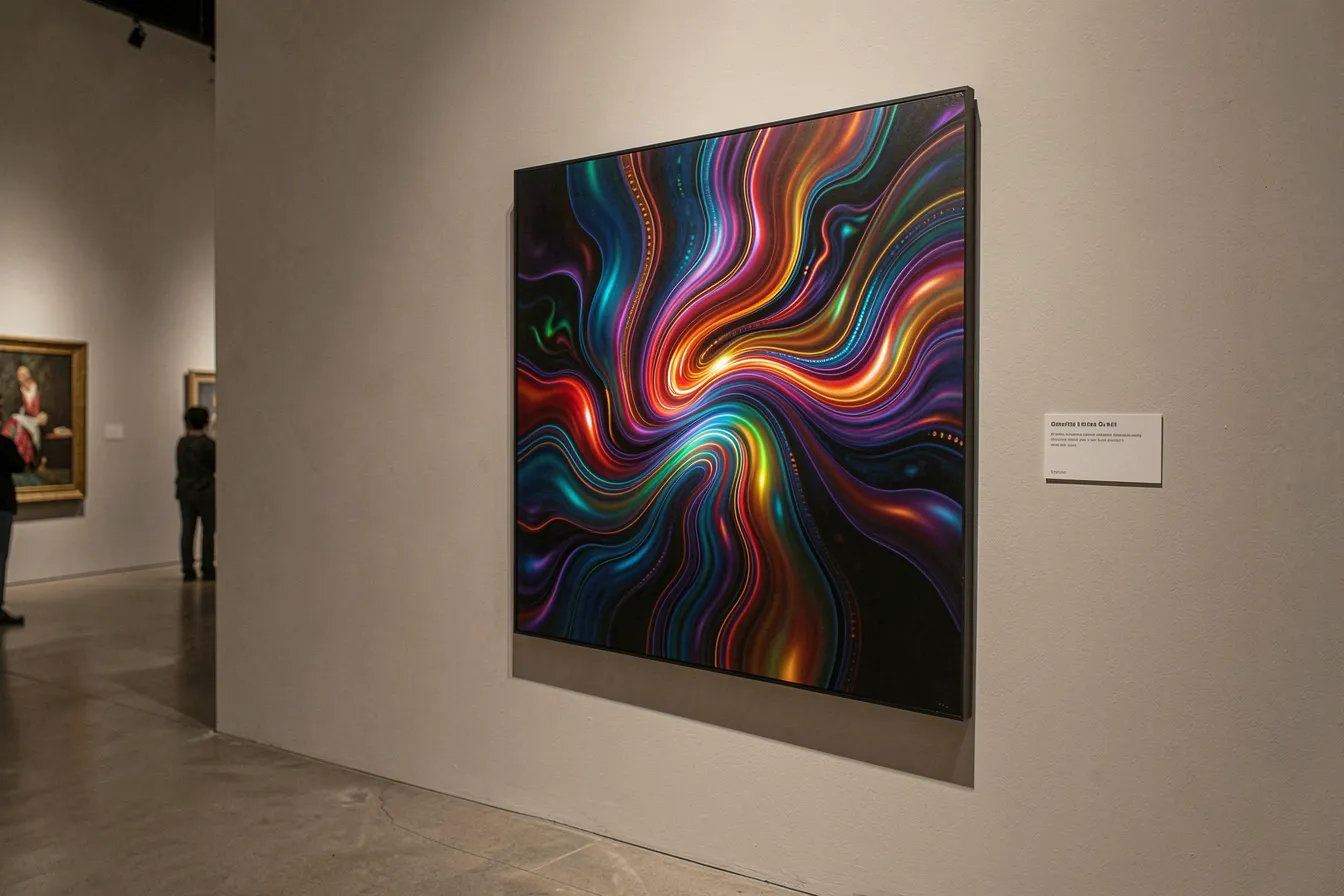
It is worth being precise about what 2026 has actually delivered. This is not the moment AI art „won.“ Generative work was notably absent from the Venice Biennale, whose 2026 edition leans toward the quiet and unheroic. Craft-based, handmade work is surging in collector demand. The center of gravity in the art world has not moved to the machine.
What has changed is subtler and arguably more durable: AI art now has infrastructure. A museum to hold it, a fair section to trade it, and a critical vocabulary forming around it. Infrastructure is how a movement survives the hype cycle. Trends fade; institutions persist. The scene isn’t converting the skeptics — it’s building the rooms where the argument can finally play out on equal footing.
Where this leaves us
For artists working with generative tools, 2026 offers a new kind of legitimacy — and a new kind of pressure. Being taken seriously by museums and fairs means being held to their standards of originality, craft and meaning. That is a healthier problem to have than being ignored.
Curious what AI-assisted art and design can look like when it’s made with intent rather than novelty? Explore ideas, styles and generated works at ai-art-designer.de and see where the medium is heading next.