
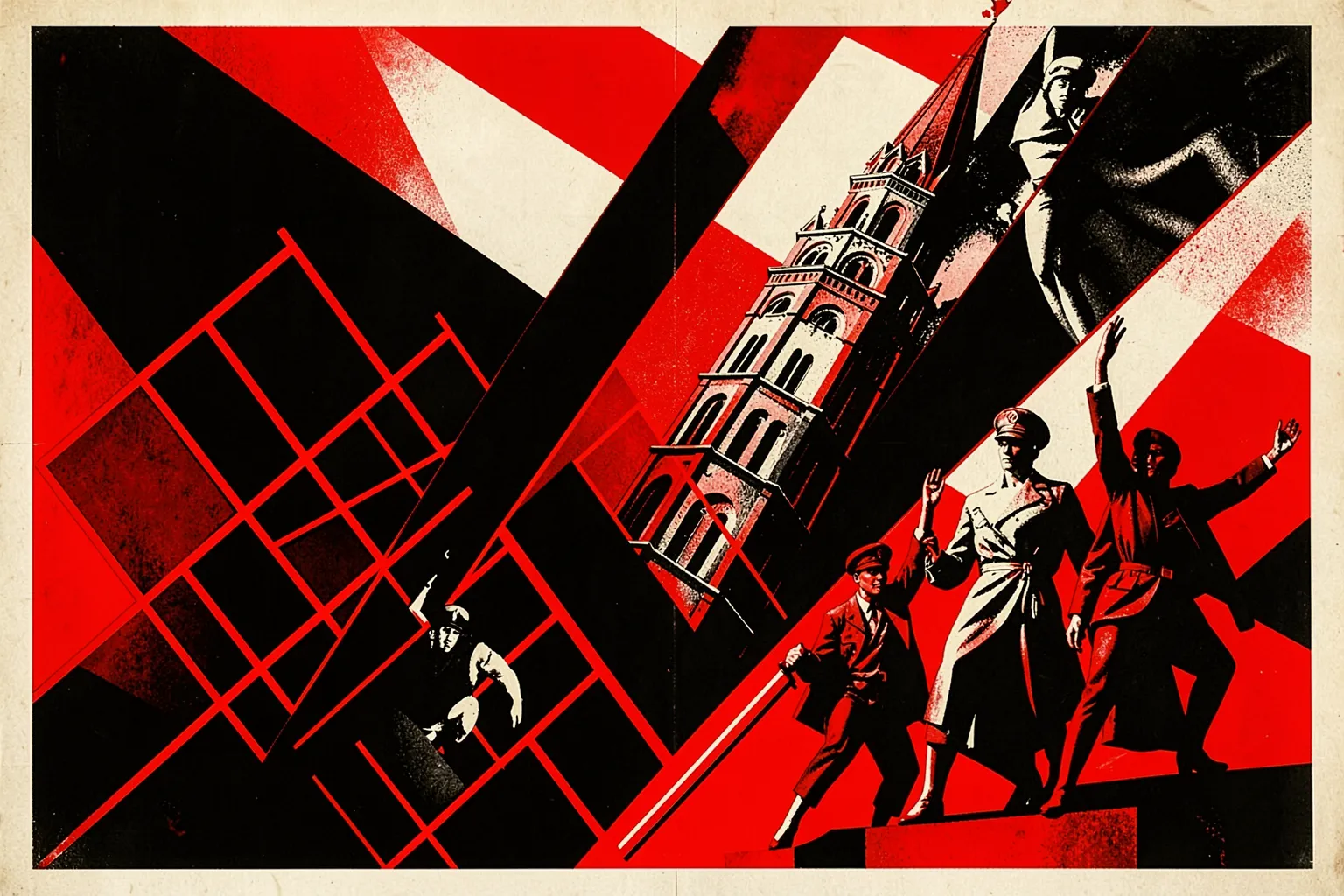
Russian Constructivism shouted with shapes. In the 1920s, artists and architects traded ornament for raw geometry. They stacked bold diagonals, red wedges, and hard sans-serif type into a visual language of revolution. A century later, generative AI reopens that toolbox. It learns the grammar of Constructivism and rebuilds it for facades, posters, and products today.
This piece looks at how AI reads Constructivist design and where it takes the style next. We trace the move from El Lissitzky’s page to a diffusion model’s canvas. We also weigh the line between homage and hollow pastiche.
What Constructivism actually demanded
Constructivism rejected decoration as a lie. Designers wanted honest structure, visible function, and art that served a new society. Tatlin dreamed of a leaning iron tower that turned as it climbed. Melnikov built cylinders and cantilevers that still look impossible.
The graphic side hit just as hard. El Lissitzky and Rodchenko cut photos apart and rebuilt them on sharp diagonals. They chose red, black, and white, and they trusted geometry to carry emotion. Every angle pushed the eye and every block meant something.
How AI learns the Constructivist grammar
A diffusion model does not memorize one poster. It absorbs thousands and extracts the pattern behind them. It learns that Constructivism loves diagonal tension, flat color, and photomontage. So a prompt for „Constructivist“ output pulls those traits together fast.
Designers steer that knowledge with precise words and references. They ask for red wedges, tilted grids, and heroic worker angles. They feed a reference image through IP-Adapter to lock the palette. The model then drafts twenty variations while the designer judges and selects.

Rebuilding the architecture
AI now sketches Constructivist buildings that the 1920s could only draw. It generates leaning towers, bold cantilevers, and exposed steel frames in seconds. Architects use these images to explore mass and rhythm early. They test a dozen silhouettes before they commit a single line to CAD.
The style suits parametric tools surprisingly well. Constructivism already thought in modules, tension, and repeated structure. So generative systems extend that logic without a fight. They multiply a wedge motif across a facade and keep the aggression intact.
From poster to product
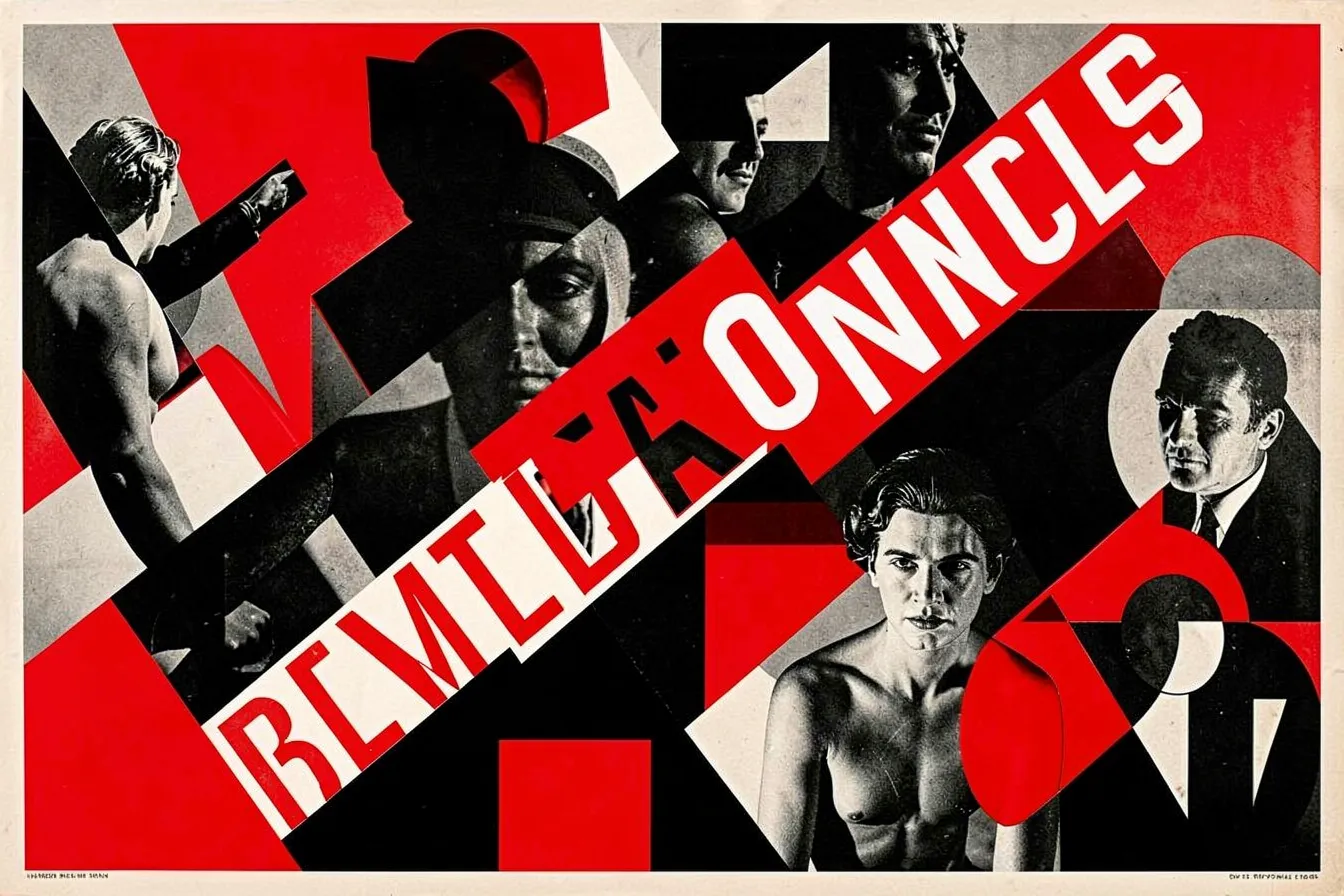
Graphic designers gain the most obvious wins. AI drafts Constructivist posters, album covers, and brand systems in minutes. It nails the diagonal type, the cropped photomontage, and the two-color punch. A studio then refines the strongest draft by hand.
Product and interior teams borrow the same energy. They translate Constructivist geometry into shelving, lighting, and bold room dividers. The look reads as modern because it never chased soft comfort. It always celebrated structure, and structure still sells.
Homage or hollow copy?
Constructivism carried politics, not just a palette. It fought for a cause and believed design could rebuild a world. When AI strips that meaning, it risks turning revolution into wallpaper. A red wedge without intent is decoration, the very thing the movement hated.
Good designers answer that risk with purpose. They borrow the grammar to say something of their own. They pair the style with a real message, brand, or civic goal. That choice separates a living tribute from a shallow filter.
Where this goes next
Constructivism gives AI a rare gift: rules with room. Its grammar is strict enough to learn and loose enough to remix. So the style will keep resurfacing in facades, campaigns, and interiors. And each revival will look sharper as the models improve.
Want to see historic movements reborn through generative design? Explore more experiments and ideas at AI Art Designer.
Images: AI-Designed